History & Mission
History & Mission
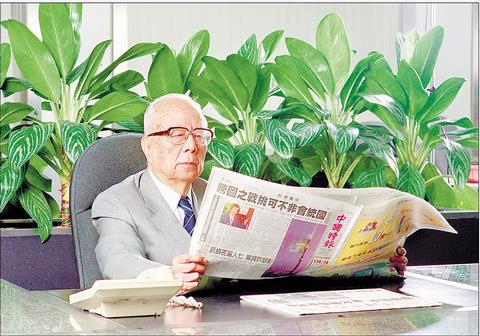
Founded in 1986 by China Times newspaper of Taiwan, Chairman Chi-chung Yu, the China Times Cultural Foundation (CTCF) is a nonprofit organization dedicated to advancing Chinese cultural studies and supporting the next generation of scholars in the humanities. Since its founding, the Foundation has provided fellowship support to hundreds of promising young researchers, many of whom have gone on to become distinguished educators and scholars. Through its fellowship program, CTCF promotes rigorous scholarship, intellectual exchange, and cross-cultural understanding.
The Foundation believes that the humanities play a vital role in fostering deeper knowledge and mutual understanding across cultures. By supporting research and dialogue, CTCF seeks to connect scholars, institutions, and communities, creating enduring bridges of learning and collaboration. By investing in promising researchers at a pivotal stage of their careers, CTCF helps ensure that important scholarship continues to thrive and that outstanding young scholars are recognized and encouraged to pursue ambitious and impactful research. The Foundation’s fellowship program welcomes applicants regardless of nationality, race, or cultural background.
History & Mission
Founded in 1986 by China Times newspaper of Taiwan, Chairman Chi-chung Yu, the China Times Cultural Foundation (CTCF) is a nonprofit organization dedicated to advancing Chinese cultural studies and supporting the next generation of scholars in the humanities. Since its founding, the Foundation has provided fellowship support to hundreds of promising young researchers, many of whom have gone on to become distinguished educators and scholars. Through its fellowship program, CTCF promotes rigorous scholarship, intellectual exchange, and cross-cultural understanding.
The Foundation believes that the humanities play a vital role in fostering deeper knowledge and mutual understanding across cultures. By supporting research and dialogue, CTCF seeks to connect scholars, institutions, and communities, creating enduring bridges of learning and collaboration. By investing in promising researchers at a pivotal stage of their careers, CTCF helps ensure that important scholarship continues to thrive and that outstanding young scholars are recognized and encouraged to pursue ambitious and impactful research. The Foundation’s fellowship program welcomes applicants regardless of nationality, race, or cultural background.
The Selection Process
The Selection Process
Each year, CTCF accepts fellowship application submissions from April through the end of June. After careful evaluation of materials submitted by applicants, the selection committee convenes to have a discussion and select award winners for the cycle, and the result is announced in early October. To ensure fairness and objectivity in the selection process, CTCF enlisted prominent and highly respected scholars as members of the review committee.
The Selection Process
Each year, CTCF accepts fellowship application submissions from April through the end of June. After careful evaluation of materials submitted by applicants, the selection committee convenes to have a discussion and select award winners for the cycle, and the result is announced in early October. To ensure fairness and objectivity in the selection process, CTCF enlisted prominent and highly respected scholars as members of the review committee.
Meet Our Selection Committee
Meet Our Selection Committee
Meet our panel of experts in Chinese studies
Meet our panel of experts in Chinese studies

Prof. Yeh, Wen-hsin
Prof. Yeh, Wen-hsin
Richard H. and Laurie C. Morrison Chair Professor & Distinguished Professor of History, UC Berkeley
Prof. Yeh is a social and political historian of culture and knowledge in late imperial and modern China, Taiwan, and maritime East Asia. Her research examines Sino-Western engagement in 19th- and 20th-century China and the consequences of systemic disequilibrium. Her areas of research include higher education, Communist and Confucian political thought, the city, visual culture and the global World War II.
Prof. Yeh is a social and political historian of culture and knowledge in late imperial and modern China, Taiwan, and maritime East Asia. Her research examines Sino-Western engagement in 19th- and 20th-century China and the consequences of systemic disequilibrium. Her areas of research include higher education, Communist and Confucian political thought, the city, visual culture and the global World War II.

Prof. Fan, Maoyong
Prof. Fan, Maoyong
Professor of Economics, Ball State University
Prof. Fan’s research interests include environmental economics, health economics and policy, labor economics and development economics. His research projects have crossed narrowly defined fields and disciplines. The research projects he has done covers (1) the health effects of environmental pollution; (2) health insurance designs and outcomes; (3) labor migration; (4) public health policies and demographics; and (5) the causes of obesity. Other facets of his research fall into development, industrial organization, and applied econometrics.
Prof. Fan’s research interests include environmental economics, health economics and policy, labor economics and development economics. His research projects have crossed narrowly defined fields and disciplines. The research projects he has done covers (1) the health effects of environmental pollution; (2) health insurance designs and outcomes; (3) labor migration; (4) public health policies and demographics; and (5) the causes of obesity. Other facets of his research fall into development, industrial organization, and applied econometrics.

Prof. Liu, Leo Yueh-yun
Prof. Liu, Leo Yueh-yun
Professor of Political Science (retired), Brandon University
Prof. Liu is a political scientist trained in Taiwan, U.S., and Canada. He has taught at the following institutions: Tenured Full Professor and Chair of Dept. of Political Science and Coordinator of Canadian Justice Studies at Brandon University, Canada and as the Adjunct Full Professor at Royal Military College of Canada. His research interests include Chinese studies (Taiwan and Mainland China, with a focus on China's military and strategic roles in world politics), Canadian studies (the Canadian criminal justice system, criminal law and procedures, constitutional law, and military law), and both quantitative & qualitative Social Science Research Methodologies (Stata, SPSS, and SAS). He is the author of China as a Nuclear Power in World Politics, Political Theory & Research Methodology, and a contributing editor of Taiwanese Polity in the Twenty-First Century–Politics and Culture in a Global Context.
Prof. Liu is a political scientist trained in Taiwan, U.S., and Canada. He has taught at the following institutions: Tenured Full Professor and Chair of Dept. of Political Science and Coordinator of Canadian Justice Studies at Brandon University, Canada and as the Adjunct Full Professor at Royal Military College of Canada. His research interests include Chinese studies (Taiwan and Mainland China, with a focus on China's military and strategic roles in world politics), Canadian studies (the Canadian criminal justice system, criminal law and procedures, constitutional law, and military law), and both quantitative & qualitative Social Science Research Methodologies (Stata, SPSS, and SAS). He is the author of China as a Nuclear Power in World Politics, Political Theory & Research Methodology, and a contributing editor of Taiwanese Polity in the Twenty-First Century–Politics and Culture in a Global Context.
Prof. Hsing, You-tien
Prof. Hsing, You-tien
Professor of Geography and the Pamela P. Fong Family Distinguished Chair in China Studies, UC Berkeley
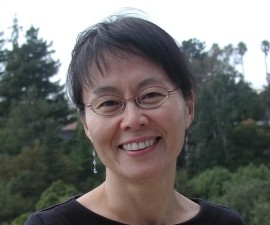
Prof. Hsing’s research and teaching focus on the political economy of development in East Asia, especially China. She is interested in the question of power and space. In her research, she relies mainly on ethnography and oral histories with a reflexive perspective. She believes that place selects researchers, and theorization starts from muddy realities on the ground.
Prof. Hsing’s research and teaching focus on the political economy of development in East Asia, especially China. She is interested in the question of power and space. In her research, she relies mainly on ethnography and oral histories with a reflexive perspective. She believes that place selects researchers, and theorization starts from muddy realities on the ground.
Prof. Wang, David Der-wei
Prof. Wang, David Der-wei
Edward C. Henderson Professor of Chinese Literature, Harvard University
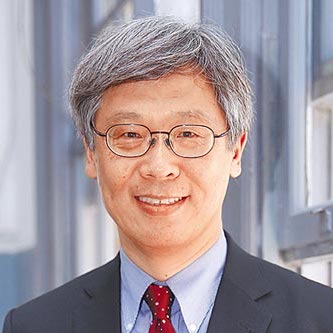
Prof. Wang’s research interests include modern and contemporary Chinese literature, late Qing fiction and drama; comparative literary theory; colonial and modern Taiwanese fiction, and Asian American and diasporic literature; plus Chinese intellectuals and artists in the mid-20th century.
Prof. Wang’s research interests include modern and contemporary Chinese literature, late Qing fiction and drama; comparative literary theory; colonial and modern Taiwanese fiction, and Asian American and diasporic literature; plus Chinese intellectuals and artists in the mid-20th century.

Prof. Wang, Qingjia Edward
Prof. Wang, Qingjia Edward
Eminent Professor at the College of Humanities and Social Sciences, Rowan University
Prof. Wang’s research focuses on the study of historiography and cultural and intellectual history of Asia, which are also his main teaching areas. Over the past decades, he has published a number of works on Chinese cultural and intellectual history, comparative historiography, historical theory, and food history.
Prof. Wang’s research focuses on the study of historiography and cultural and intellectual history of Asia, which are also his main teaching areas. Over the past decades, he has published a number of works on Chinese cultural and intellectual history, comparative historiography, historical theory, and food history.